

AI CCTV & Surveillance Surveillance feeds that watch, understand and alert.
Every camera placed from a detailed coverage map, connected to AI-powered video analytics that detect threats in real time rather than simply recording them for review after the event.
What is AI-based CCTV?
AI-based CCTV combines strategically placed IP cameras with video analytics software that recognises events such as intrusion, licence plates, smoke or overcrowding in real time. Instead of simply recording footage for review after an incident, it alerts security staff while there is still time to act.
Conventional CCTV records what went wrong. We design AI-based surveillance that recognises risk as it happens and alerts your security team while there is still time to act.
What the solution delivers.
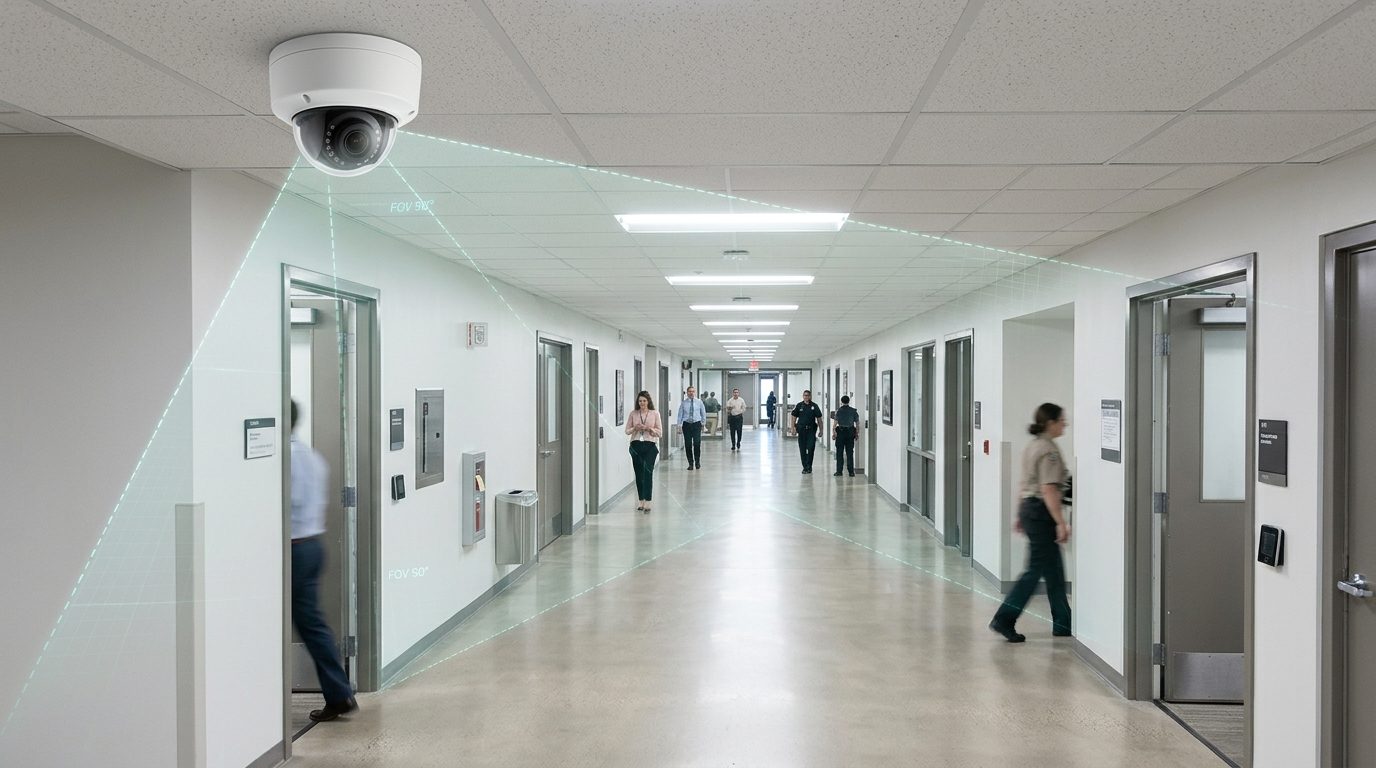
Coverage
Strategic camera placementCamera positions, types and angles planned on the architectural drawings, so entrances, car parks, lifts, corridors and perimeters are covered with no blind spots.
- Coverage maps for every floor
- Right camera for each location
- Night and low-light performance planned
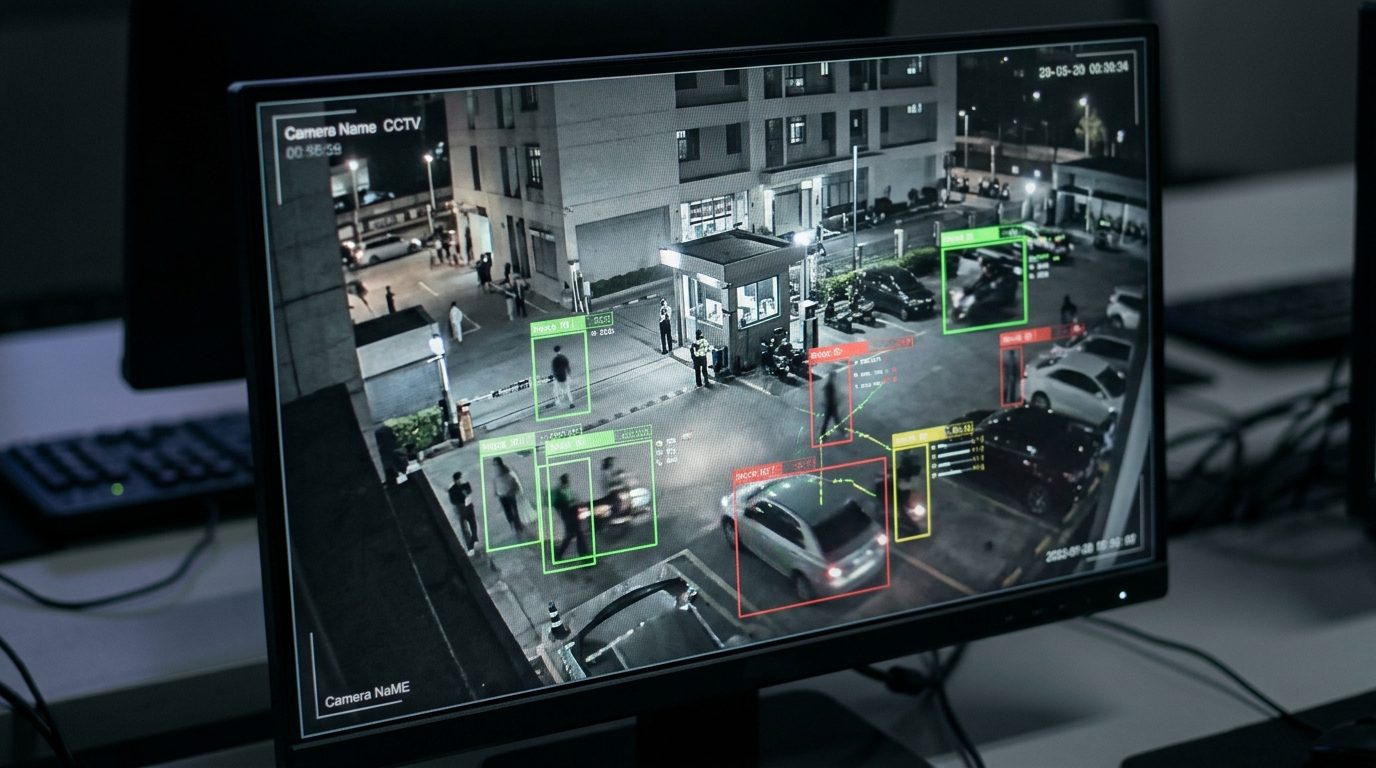
Intelligence
AI video analyticsAI-enabled recorders and software analyse feeds from standard IP cameras to turn video into actionable alerts.
- Licence-plate recognition at entry points
- Intrusion, loitering and perimeter alerts
- Visual fire and smoke detection
Control
Monitoring and storageA central control room in the Meet-Me Room, with storage sized for your retention period and secure remote access for authorised staff.
- Storage and retention calculations
- Bandwidth and network planning
- Role-based remote viewing
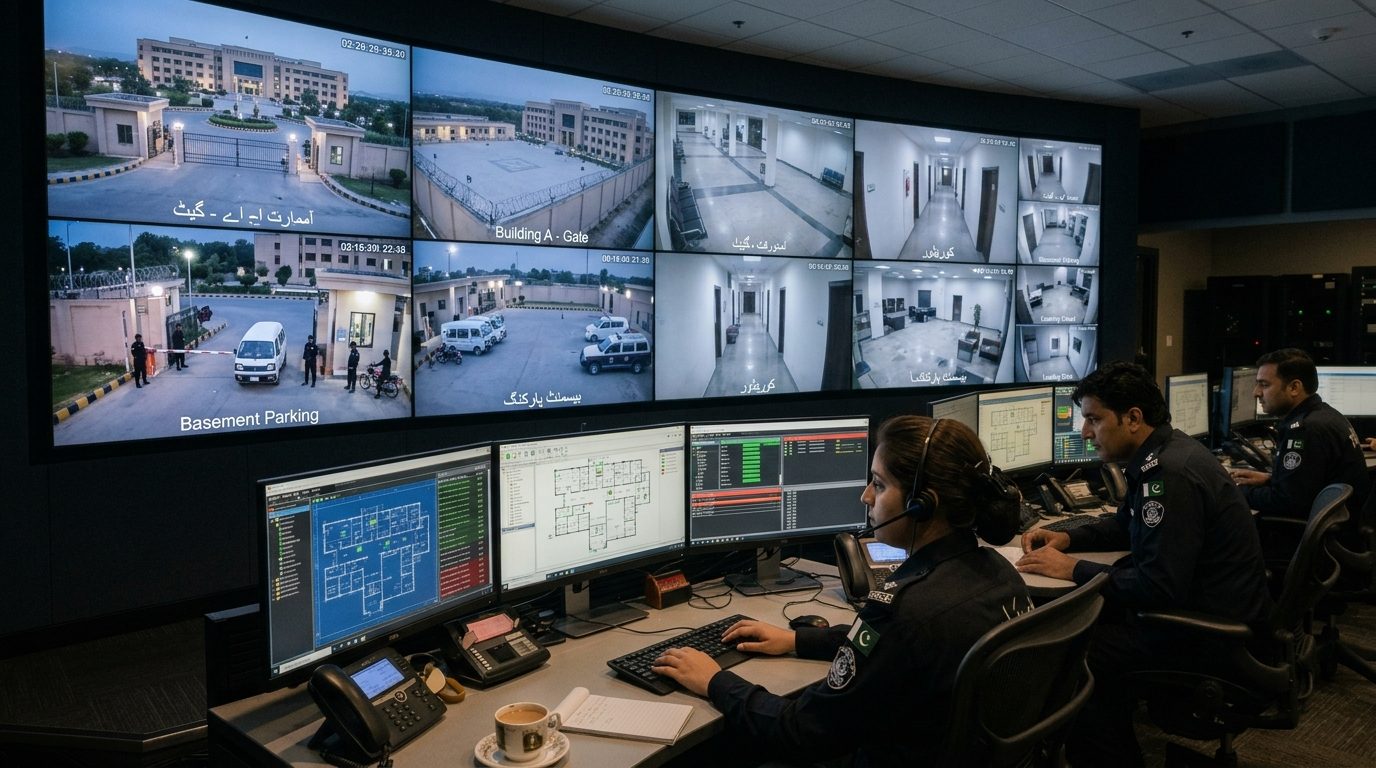
Video wall
Command-and-control displayA tiled video wall in the security control room brings every camera, AI alert and site map onto one shared display, so operators see the whole property at a glance and respond together when an alert is raised.
- Video-wall size, layout and viewing distances
- Display controller and camera-to-screen mapping
- Operator desks, sightlines and ergonomics
Cameras that understand what they see.
Analytics run on AI-enabled recorders or servers, so standard IP cameras gain these capabilities without being replaced. We specify which functions run on which cameras, based on the risks and goals of each building.
Security
Intrusion & perimeter detection
Virtual fences and restricted zones that raise an alert the moment someone enters out of hours or crosses a boundary.
Licence-plate recognition (ANPR)
Reads number plates at entry and exit points, opens barriers for registered vehicles and keeps a searchable log of every visit.
Face recognition
Matches faces against authorised or watch lists at controlled entrances, used only where the law and building policy permit.
Loitering & abandoned objects
Flags people lingering in sensitive areas and bags or packages left unattended in lobbies and car parks.
Safety
Fire & smoke detection
Recognises visible smoke plumes and open flames in camera views, often before conventional heat detectors are triggered.
PPE & uniform compliance
Checks that staff and contractors wear helmets, vests and uniforms in plant rooms, loading bays and construction zones.
Fall & distress detection
Detects a person who has fallen in stairwells, car parks or common areas and alerts the security team immediately.
Crowd density monitoring
Warns security before lobbies, events or exits become overcrowded, so staff can act before it becomes unsafe.
Insight & operations
Demographic analysis
Anonymised estimates of visitor age range and gender, giving retail and commercial tenants footfall insight without identifying anyone.
People counting & footfall
Counts entries and exits by door, floor and hour to inform occupancy, staffing and cleaning schedules.
Heatmaps & space utilisation
Shows how lobbies, amenities and retail areas are actually used, to improve layouts and cooling schedules.
Auto-tracking PTZ cameras
Smart pan-tilt-zoom cameras automatically follow a detected person or vehicle across the scene.
Every detail, documented before construction.
Vendor-agnostic and performance-based, so any qualified contractor can price and build it.
Risk assessment
Security zones and priorities agreed with the owner before any camera is placed.
Camera schedule
Location, type, lens and mounting for every camera.
Analytics plan
Which AI functions run where: LPR, intrusion, occupancy, fire and smoke.
Network design
PoE switching, bandwidth and segregation from other building systems.
Storage design
Recording capacity calculated for the required retention period.
Control room
Video wall, workstations and operator layout in the Meet-Me Room.
Designed for everyone with a stake in the building.
For developers
Visible, intelligent security that raises the value of every unit, with a design that can be tendered to any compliant supplier.
For architects
Discreet camera positions coordinated with façades, ceilings and landscaping, rather than added as an afterthought.
For building owners
Lower security risk and operating cost, with real-time alerts and searchable footage for the building’s management and security teams.
Deliverables
- Camera coverage maps
- Camera and analytics schedule
- Storage and bandwidth calculations
- Control-room layout
- Specifications and bill of quantities
Converged by design
Frequently asked questions
Do we need to replace existing cameras to add AI analytics?
Usually not. Analytics can run on AI-enabled recorders or servers that process feeds from standard IP cameras, so compatible existing cameras can often be retained.
How do you avoid blind spots?
We plan every camera position, type and angle on the architectural drawings and produce coverage maps for each floor and the perimeter before installation.
How is privacy protected?
Each analytics plan defines data retention, access rights and signage, and biometric functions such as face recognition are used only where the law and building policy allow.
Planning a new development or upgrading a building? Talk to us about AI CCTV.
Send your architectural drawings and we will outline scope, deliverables and timeline.